65 per cent of industry emissions could be cut by long duration energy storage
15 November 2023
15 November 2023
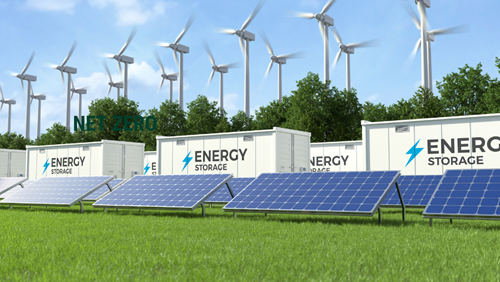
Industry is responsible for almost a quarter of global emissions, making it one of the highest emitting industries globally alongside transport, energy generation, and food systems. Long duration battery storage (LDES) solutions could alleviate 65 per cent of industry emissions, with opportunities for wider application.
Read here: Battery storage needed for the UK’s clean energy sector
A new report from the LDES Council champions LDES as one of the most practical partner technologies for renewable energy and off-grid applications, such as solar power, EV chargers and wind power. The emissions that commercially available LDES electric and heat technologies could reduce represent an opportunity equivalent to 8 billion tonnes of CO2.
Julia Souder, chief executive of the LDES Council, said: “Decarbonizing industry is one of the largest challenges we face on our journey to achieve net zero. This report finds that there is no time to waste and no reason to delay action. LDES and renewables can be crucial in cost-effectively reducing emissions across key industrial sectors in the short, medium, and long term.”
According to the report, these technologies also “reduce the cost of abatement by more than 20 per cent for low-to-medium temperature processes used in food manufacturing and chemical processes,” with further application of LDES solutions for off-grid processes, heat, and grid-connected energy sources. However, the headline stands that LDES is capable of reducing emissions from industrial processes by two thirds.
In total, the report identifies four key categories of LDES technology as achievable and effective solutions for industrial decarbonisation: electrochemical, thermal, mechanical, and chemical.
When the grid is experiencing periods of high demand, LDES provides a reliable supply of power for off-grid applications, reliable heat, and power for grid-connected industrial processes, thus reducing reliance on the grid itself.
In order to be defined as long duration, energy must be stored for a minimum of eight hours, allowing the system to service surplus energy demand. Major organisations, including Microsoft and BHP, have already invested heavily in LDES in a bid to decarbonise their own operations and service volatile energy demand elsewhere.
“Some of the world’s biggest companies are adopting long duration energy storage technologies to support industrial processes,” adds Julia Souder. “However, we require policy-makers to create the right market mechanisms and provide effective support to supercharge the success of these solutions.”



A free tool to help you calculate the cost and
opportunity of solar on your property.

Sales. Collaboration. Growth.
We are the green tech, low carbon and
environmental sector development organisation.

We can help you raise your profile and win more work.

12 February 2026
In partnership with delivery partners Nesta and MCS, the project is designed to help newly trained heat pump installers in Greater Manchester and West Yorkshire become active, confident and competent members of the heat pump sector.
21 January 2026
The UK Government has unveiled their new Warm Homes Plan, providing funding for households across the UK to encourage investment in solar PV, battery storage and heat pump technologies.

08 October 2025
Green Economy engaged with 5804 businesses in the 2024-2025 financial period, reaching over 20 million people through communications and business activities. Read our full Impact Report here!
Share